Oh, what a night! Les Misérables World Tour Spectacular
For many millennials, Les Misérables is practically a rite of passage — and whether it's your first time or your tenth, seeing it live never loses its magic.
ARTS & CULTURE
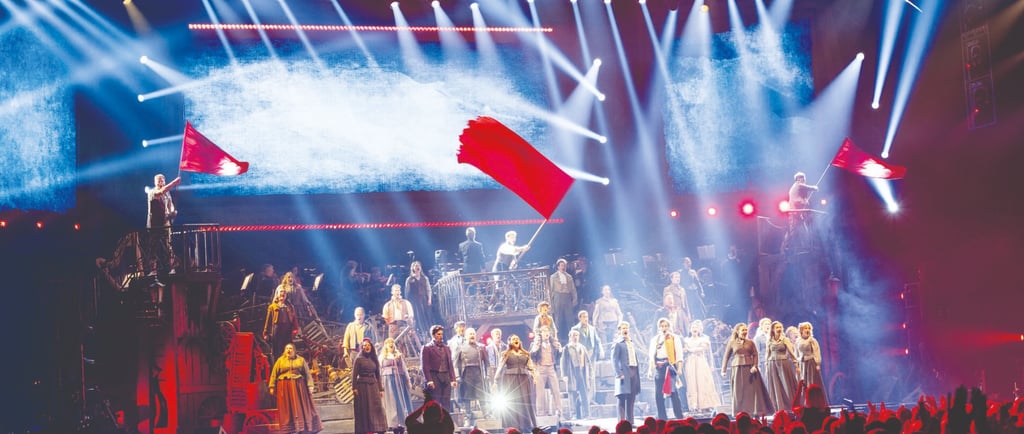
Whether it’s your first time or your nth, seeing Les Mis live never loses its magic.”
For many millennials, Les Misérables is hardwired into memory—discovered through cassette tapes, VHS recordings, TV specials, CDs, and for the lucky few, a pilgrimage to London or Broadway. The barricades, the broken dreams, the defiant hope—all of it seared into our collective consciousness long before we fully understood what it meant to fight for something bigger than ourselves. Whether it’s your first time or your nth, seeing Les Mis live never loses its magic. It’s the kind of show that reminds you why musical theater exists in the first place.
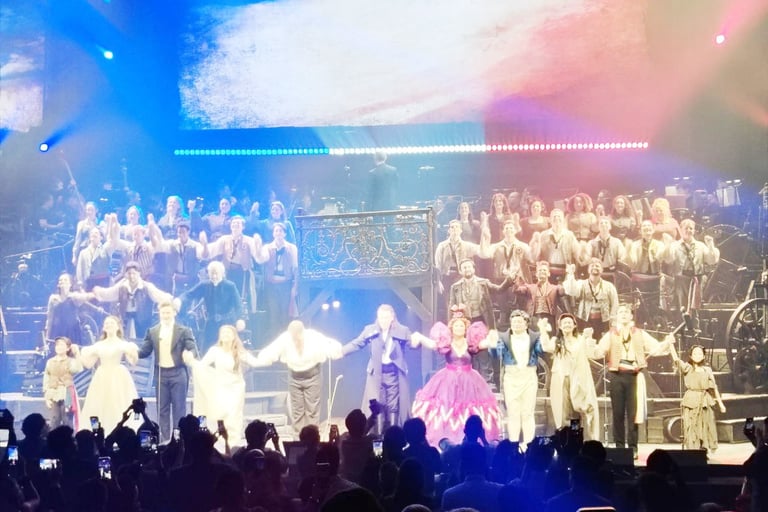
Now 40 years old, the musical has returned to Solaire in a reimagined format that blends concert staging with music-video aesthetics—a fresh visual language that gives veteran theatergoers something genuinely new to experience. Paired with the story’s timeless themes of love, hope, redemption, and social justice, it’s an experience that delivers on every emotional level. Thursday’s gala night performance proved exactly that, leaving the audience visibly moved and audibly buzzing as the lights came up.
Gerónimo Rauch from Argentina commands the stage as Jean Valjean with a presence that’s both formidable and deeply human. His imposing build is softened by an expressive tenderness in his face and gestures, making you believe entirely in his transformation from hardened convict to compassionate protector. Opposite him, Australian Jeremy Secomb’s Javert is a study in manic precision—obsessive, rigid, and utterly compelling in his twisted sense of righteousness. Every line lands with the weight of a man who has built his identity on inflexible law, and when that foundation crumbles, Secomb makes the fall devastating. His suicide leap becomes a chilling tableau of zealotry coming undone, a moment so stark it lingers long after the scene shifts.


As Fantine, Rachelle Ann Go brings raw vulnerability and haunting beauty to “I Dreamed a Dream.” Now a mother herself, she inhabits the role with an instinctive depth that feels both intensely personal and heartbreakingly universal. You feel her desperation, her exhaustion, her flicker of defiance against a world that has stripped her of dignity. Go doesn’t just sing the song—she lives it, and the audience feels every note as if it were their own grief being voiced.
The Thénardiers—played by Red Concepción and Lea Salonga—steal scenes with gleeful audacity in “Master of the House.” Salonga, clearly relishing the chance to play something other than a doomed ingénue, reveals sharp comedic timing, impeccable physicality, and a wicked glint in her eye. Her voice, delivery, and body language as Madame Thénardier are a masterclass in character work, proving once again that she can do absolutely anything on stage. Concepción, meanwhile, doesn’t just play Thénardier for laughs. He finds the menace beneath the charm, the cruelty behind the clowning. His performance is a study in duality—yes, he’s funny, but he’s also crude, opportunistic, and unsettling. You laugh, but you’re also reminded that even in good humor, this man is dangerous and not to be crossed.
Then come the gut punches. Emily Bautista’s Eponine delivers “On My Own” and “A Little Fall of Rain” with crystalline power and aching sincerity. Her voice is strong, clear, and devastatingly expressive, blending beautifully with Will Callan’s Marius in a duet that feels like watching someone’s heart break in real time. Bautista makes you feel Eponine’s unrequited love not as melodrama but as lived truth—the quiet tragedy of loving someone who will never see you the way you see them. Meanwhile, Lulu-Mae Pears as Cosette offers a delicate soprano so pure and luminous it conjures images of Snow White with animated birds circling her head. She embodies youthful innocence untouched by the world’s cruelty, a fragile bloom protected by Valjean’s love and Marius’s devotion.


Harry Chandler’s Enjolras leads the revolutionaries with fiery conviction, his voice ringing out with the fervor of someone who truly believes a better world is possible. The barricade scenes crackle with energy and idealism, and when the students fall, their death scene is gripping in its stillness and solemnity. Even the chorus deserves praise—their voices swell with such collective power during “Do You Hear the People Sing?” that you feel the revolution rising from your seat.
The production’s technical execution is extraordinary. The lighting design bathes dying characters in radiance while battle scenes pulse with stark contrasts that evoke epic chaos. There’s a moment during the fighting that recalls the epic scale of Star Wars, all shadow and light clashing in operatic grandeur. The projections anchor the narrative without overwhelming the live action, and the orchestra under Adrian Kirk’s direction sets every emotional beat with precision, swelling at just the right moments and pulling back when the story needs space to breathe.
It’s a night that reminds you why this story endures. Even after 40 years, Les Misérables still feels urgent and necessary. In a world still grappling with inequality and injustice, the barricades feel less like historical footnote and more like mirror. The show asks: What are you willing to fight for? And when the ensemble sings “Do You Hear the People Sing?” it’s hard not to feel that old stirring—the one that makes you believe, however briefly, that change is possible if enough people raise their voices together. | Photos by Raymond Cardiño and GMG Productions