Storytelling: Building authentic connections, communities, and brands that last
PJ Valenciano on why storytelling — not marketing tactics — builds the trust, relationships, and communities that make brands last, drawing on 20 years across nonprofits, tech, and purpose-driven business.
OP-ED
PJ Valenciano
7/11/20264 min read
Storytelling isn't new, and it isn't a marketing invention. It's part of human evolution.
Over the past two decades, I've worked with nonprofit organizations, educators, technology companies, entrepreneurs, Fair Trade organizations, community initiatives, and purpose-driven businesses. On paper, these worlds look nothing alike. But one lesson has held steady across all of them: people connect with stories before they connect with products, services, or ideas.
I've watched storytelling become the bridge between organizations and the communities they hope to serve. It builds trust, strengthens partnerships, creates belonging, and reminds people why they cared in the first place. That's taught me to see storytelling not as a communication technique, but as one of humanity's oldest ways of making meaning together.
Storytelling isn't new, and it isn't a marketing invention. It's part of human evolution.
Long before written language, we had oral traditions — around fires, in caves, across villages — passing on wisdom, teaching lessons, preserving traditions, connecting generations. Stories were humanity's first form of education, culture, and community-building. They explained the stars, taught which plants could heal, preserved a community's history, and helped people make sense of life and death. They were never just entertainment. They were survival.
In many ways, they still are.
When businesses use storytelling today, they're tapping into that same instinct: the need to connect through shared experience. A story, when it's authentic, does more than sell. It builds trust, nurtures relationships, and sustains communities over time.
Across my years as an entrepreneur, communications professional, consultant, and community builder, I've seen this play out again and again: stories are what connect us. It's not the content calendar, the latest platform, or the most carefully optimized ad campaign — valuable as those tools are. What sticks is the story behind an organization and the authenticity of the people behind it. That's what builds trust and, over time, communities that sustain both the work and the people who believe in it.
Simon Sinek captured it well: "People don't buy what you do; they buy why you do it."
Purpose gives a story its direction. Without it, storytelling is just another marketing exercise. In a world full of trends, algorithms, and metrics, it's worth returning to a simpler question: what kind of story are we actually trying to tell?
Beyond the why: understanding people through story
Businesses need to generate profit — that's what lets them keep serving customers, supporting employees, and fulfilling their missions. But I've also seen how exhausting it gets when profit becomes the only measure of success.
Storytelling shifts that. Instead of focusing only on transactions, it invites people into something bigger than a purchase. It creates shared purpose and real connection. When people recognize themselves in your story, they stop being just customers — they become advocates, collaborators, members of a community.
Storytelling reminds us that organizations are made up of people. Behind every brand are individuals with convictions, experiences, questions, and aspirations. Shared honestly, those human stories build understanding and trust, and give people something real to connect with. Over time, those connections become relationships, and those relationships become communities.
Long before brands existed, stories brought people together — helping communities understand who they were, where they belonged, and which values to carry forward.
Why storytelling endures
Simon Sinek tells us to begin with why. It's a question that goes beyond marketing, because purpose gives direction to the work — it reminds us what we hope to contribute, who we hope to serve, and why the work matters beyond products, services, or profit.
But somewhere along the way, I got just as curious about a different question: how?
How do people learn to trust? How do communities form? Why do some stories stay with us for years while others vanish almost as soon as they're told? What makes us feel seen, understood, or inspired enough to support an idea, a cause, or an organization?
Those questions took me well past marketing.
Sociology taught me to see people not as isolated individuals, but as members of families, cultures, and communities that shape how they understand the world. Psychology offered another lens — the emotions, motivations, and experiences that shape our decisions, often more than logic does.
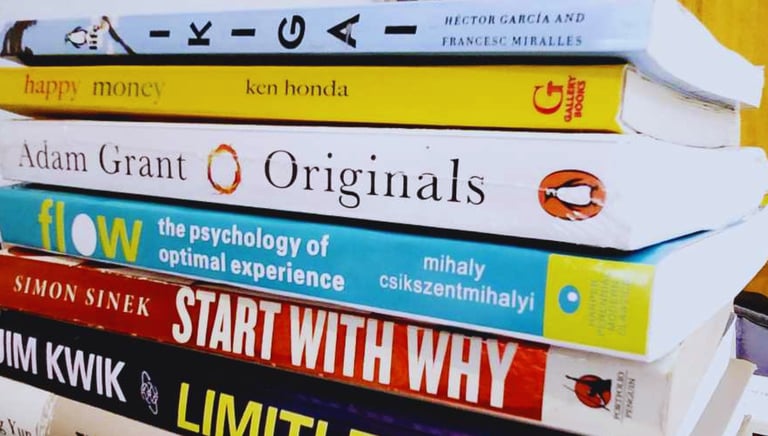
Much of this found its way into the books I was reading. Leadership pushed me to think harder about purpose. Sociology and psychology helped me understand people and communities. Philosophy invited reflection. Novelists like Joanne Harris reminded me that stories are rarely just about events — they're about memory, belonging, identity, love, loss, and the quiet ways ordinary lives change. "The Power of Now" offered a different invitation: slow down, pay attention, experience life with more awareness.
The more widely I've read — sociology, psychology, leadership, philosophy, memoir, fiction — the more convinced I've become that storytelling is ultimately about understanding people. Marketing is just one place where that understanding shows up.
Maybe that's why the organizations that stay with us aren't the loudest ones. They're the ones whose stories feel lived rather than manufactured — reflected not just in what they say, but in how they serve, how they build relationships, and how consistently they show up for the communities they want to reach.
The more I think about storytelling, the less it looks like a communication technique to me. It looks like a practice of curiosity — a willingness to understand people before trying to persuade them, to listen before speaking, to build relationships before expecting trust.
Storytelling helps us understand people. Marketing communicates that understanding. Branding reflects it over time.
Have a story to tell? We'd be more than happy to help! Drop a line at hello@ithappens.icu